What Makes an HCM Stack Startup-Ready?
Every startup founder knows the truth: speed is a matter of survival. Growth can happen overnight, and so can disruption. But here’s the part often overlooked—if your Human Capital Management (HCM) stack can’t keep pace with that growth, it’s not startup-ready.
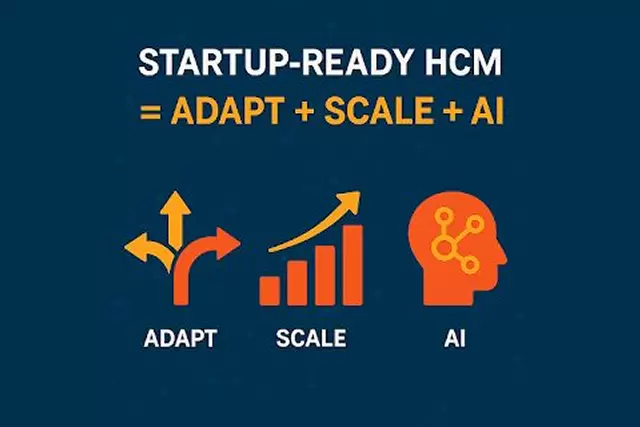
A startup-ready HCM stack must excel in three key areas: adaptability, scalability, and effective communication with AI. Without these traits, HR technology risks becoming a bottleneck instead of a business enabler.
Startups live and breathe change. One week, you’re refining your product; the next, you’re shifting your go-to-market strategy. That kind of pace demands an HCM stack that can bend with the business. Whether it’s adopting new hiring models, keeping up with changing compliance rules, or managing a hybrid workforce, rigidity is the enemy of agility.
And then there’s scale. Maybe today you’re a tight-knit team of 30. But after your next funding round, you could be 300 people spread across multiple regions. The tools that worked well in the early days often crumble under such pressure. A startup-ready HCM stack grows with you instead of becoming the bottleneck that slows you down.
Finally, let’s talk about AI. In today’s world, it’s not just a nice-to-have—it’s the connective tissue that ties everything together. From predicting which candidates are most likely to thrive to tracking employee engagement in real time, AI brings the intelligence startups need to move fast and smart. If your stack can’t “speak AI,” you’re not just behind—you’re already at risk of being outpaced.
Why does this matter? For startups, people are the business. Talent acquisition, retention, and engagement have a direct impact on survival and growth. Yet, too many leaders treat HCM systems as back-office utilities rather than strategic assets. The truth is, a modern HCM stack isn’t just about payroll and compliance—it’s about unlocking intelligence that drives more intelligent decisions at scale.
At IMC, we’ve seen the difference play out in real time. The startups that commit early to building adaptable, scalable, AI-ready HCM stacks don’t just run their HR processes more smoothly—they unlock real strategic advantages. They’re able to hire faster and smarter, retain top talent even in cutthroat markets, navigate compliance challenges with confidence, and foster cultures that thrive on agility and foresight.
On the other hand, the companies that put off these investments often find themselves stuck in firefighting mode, patching system limitations instead of focusing on the growth that really matters.
Final Thought
Being startup-ready isn’t about the size of your team or the stage of your funding—it’s about the readiness of your infrastructure. If your HCM stack can’t adapt to change, scale with growth, and communicate with AI, it’s not just holding you back—it’s putting your future at risk.
The question for every founder and HR leader is simple: Is your HCM stack built for today, or for tomorrow?